Mediterranean
A broader tourism offer and destination content that needs to help users move from many possibilities toward a relevant choice.
Tourism · Booking · Destinations
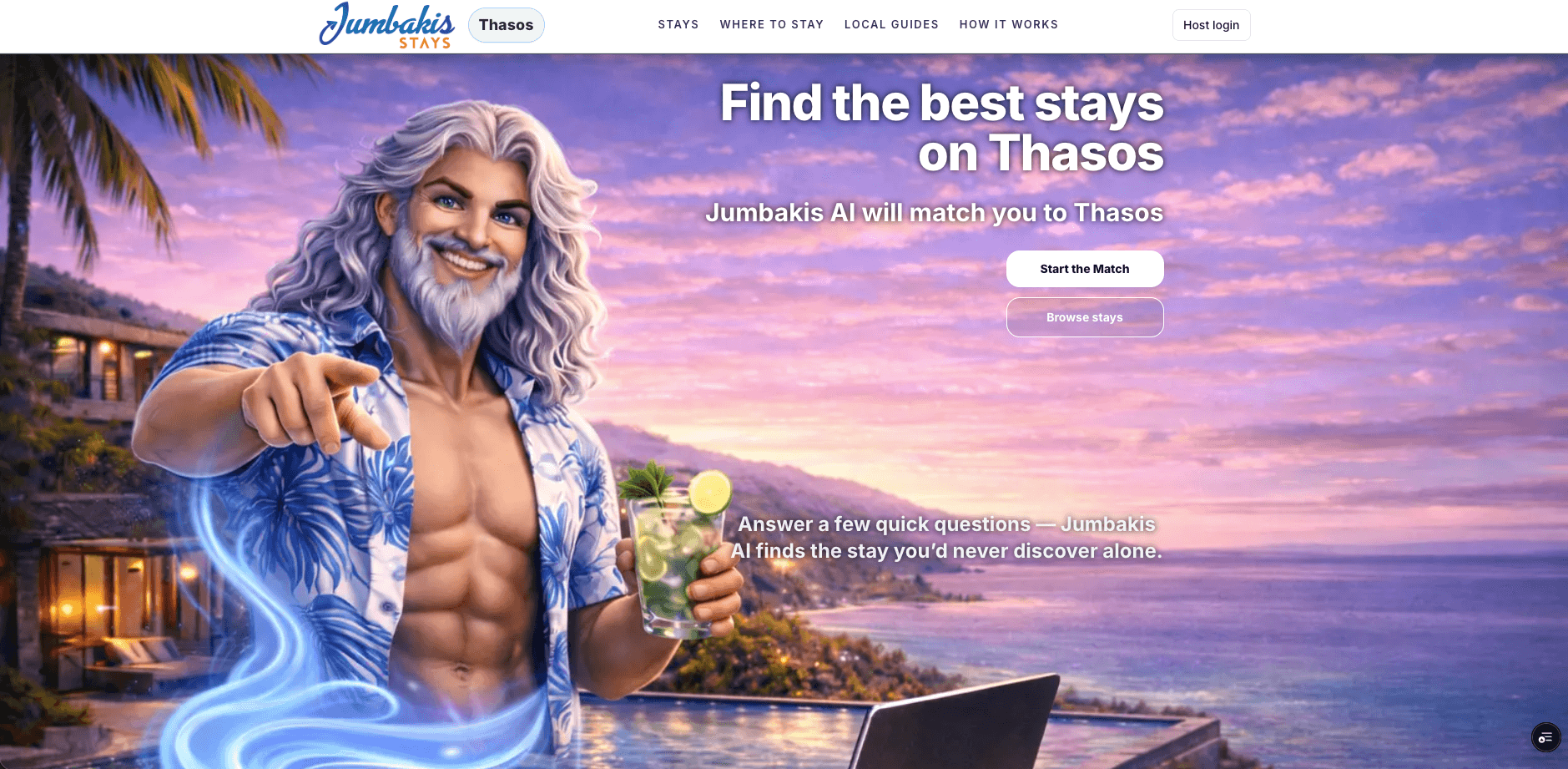
Jumbakis Stays brings together tourism product experience across the Mediterranean, Thasos, Kavala, and Istria — different destinations that still need to feel like parts of one consistent system.
Tourism · Accommodation · Destinations · SEO · UX
Tourism domain
A tourism product is not a conventional data catalogue.
Photography, location, destination context, accommodation, and practical information all influence the decision. The structure therefore needs to remain rational while still being visual enough to communicate the character of the place.
This is also a domain where my development work, long-term photography experience, and SEO perspective naturally come together.
Destinations
A broader tourism offer and destination content that needs to help users move from many possibilities toward a relevant choice.
A destination with its own accommodation and content context, where the structure needs to connect the place, the offer, and the user's travel intent.
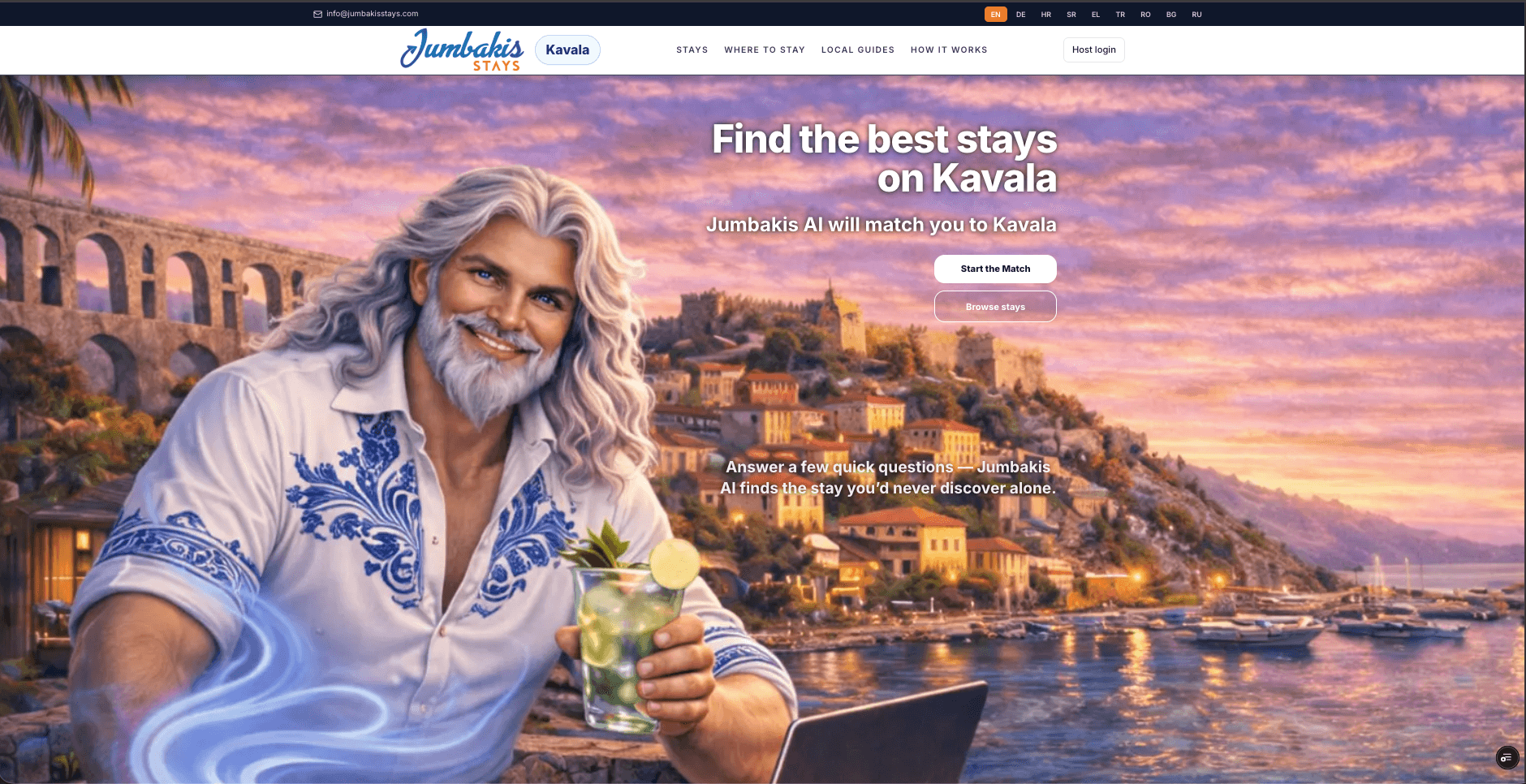
A different destination context that still needs to remain part of the same clear digital product.
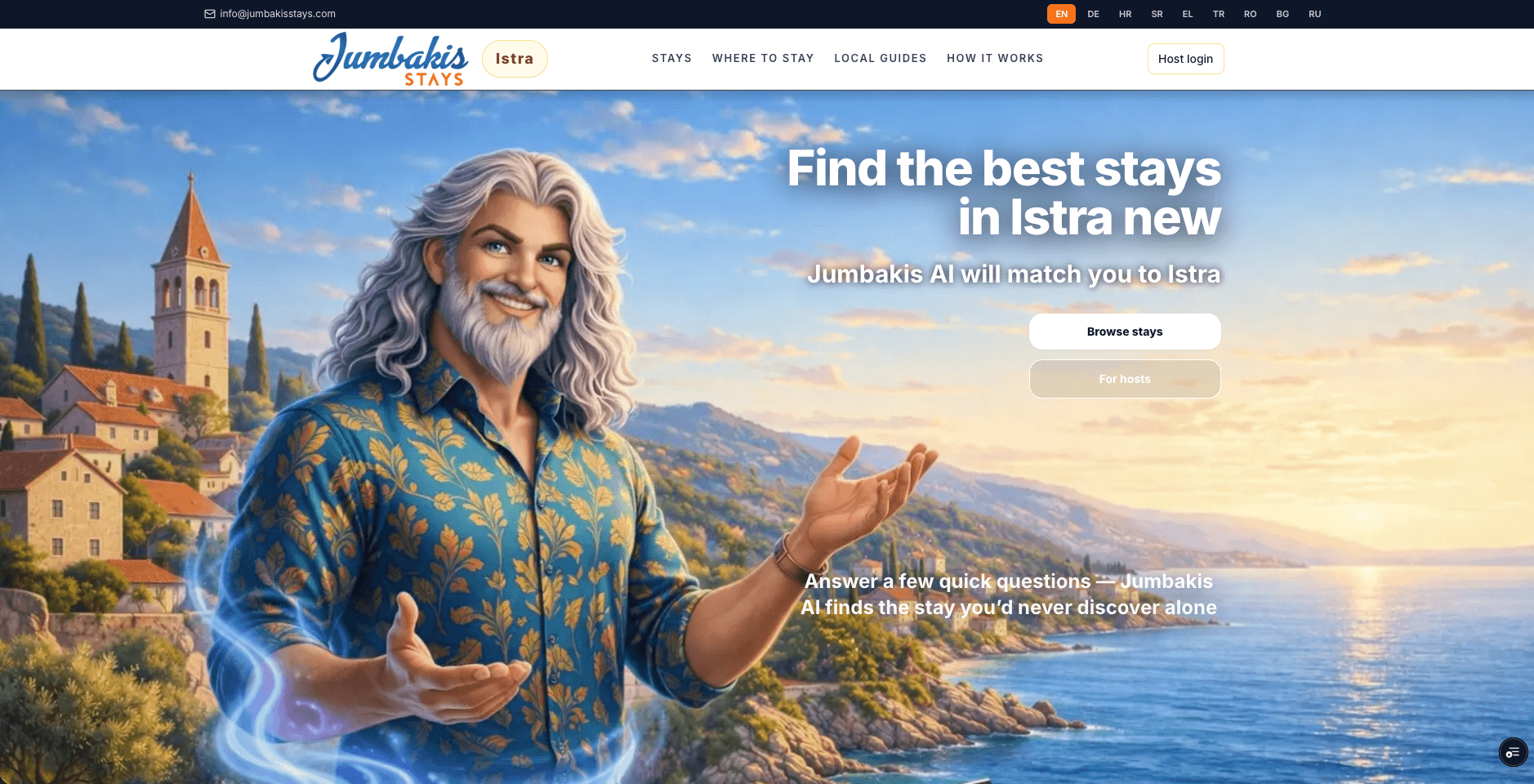
Another market and tourism context, while keeping a consistent structure, navigation, and way of presenting accommodation.
Destination identity
Each destination should keep its own character while users can still recognize the same navigation model and the same product behind it.
Challenges
Users often choose a place, atmosphere, or region before they choose a specific accommodation.
Tourism platforms quickly accumulate destinations, properties, photography, descriptions, and practical information that still need to remain understandable.
Tourism is a highly visual domain. Photography and the way a destination is presented directly influence how users feel about the offer.
Destinations and individual pages need a structure that makes the relationship between regions, places, and accommodation clear to both users and search engines.
A large part of travel research happens on phones, so photography, navigation, and user journeys need to work naturally on smaller screens.
A beautiful destination page is not enough. Users need a clear path toward details, enquiries, contact, or a booking-related action.
Accommodation
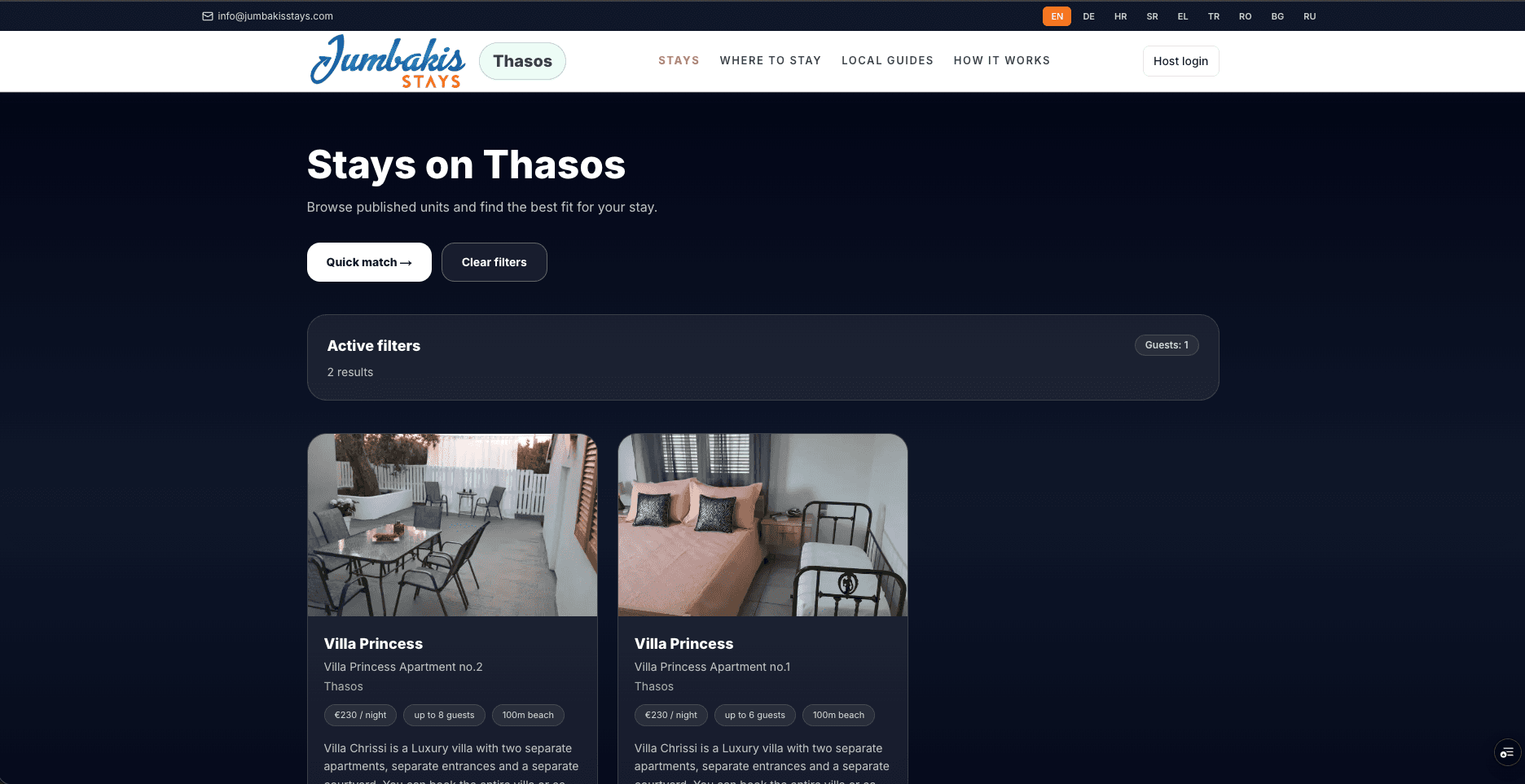
Once users have chosen a destination, the platform needs to help them move from a general travel idea toward a concrete accommodation option.
AI matching
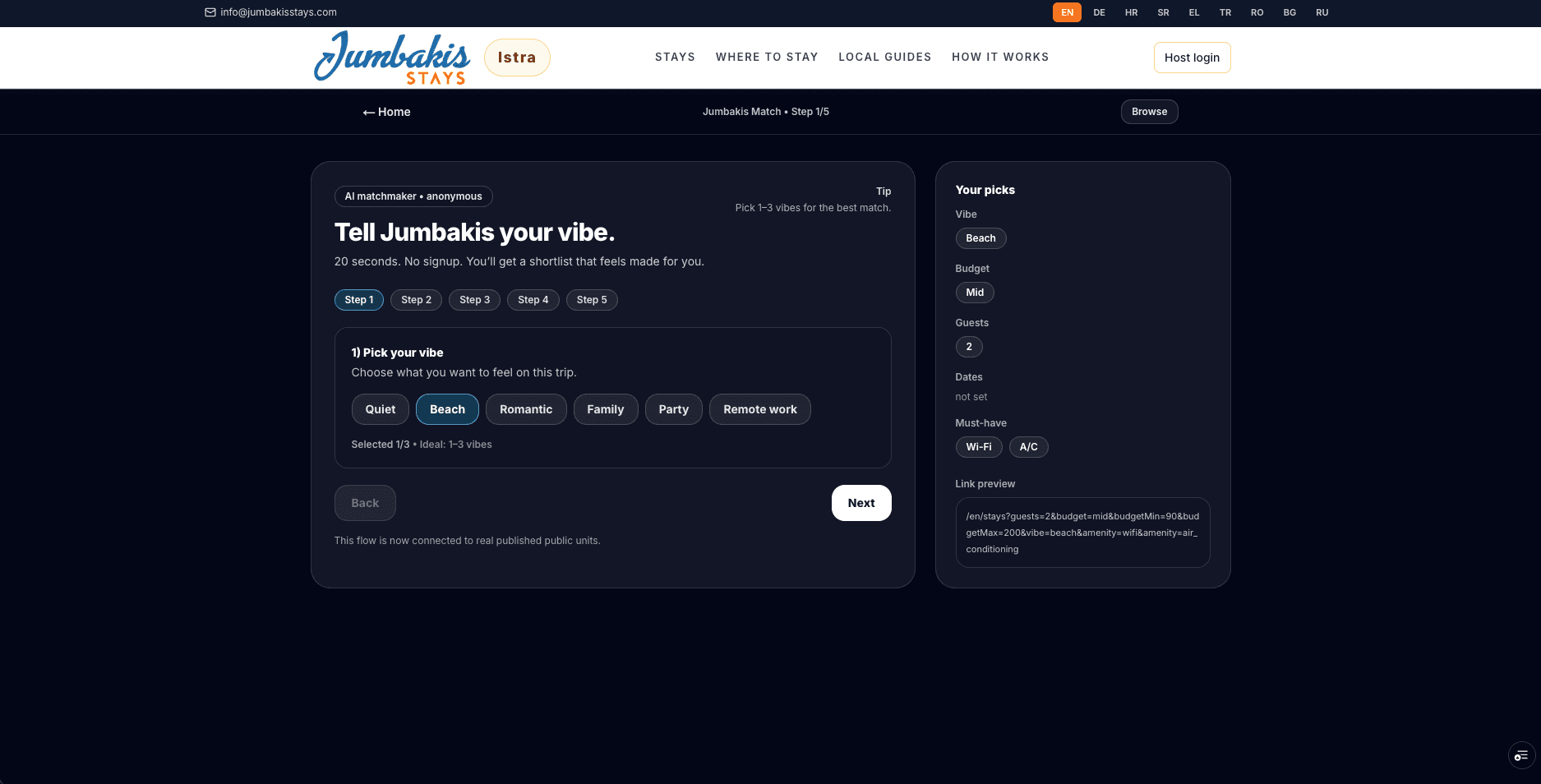
Jumbakis Match guides users through a short set of questions about travel atmosphere, budget, number of guests, and important amenities, then connects those preferences with accommodation that is actually available in the product.
Relevant results
Detail UX
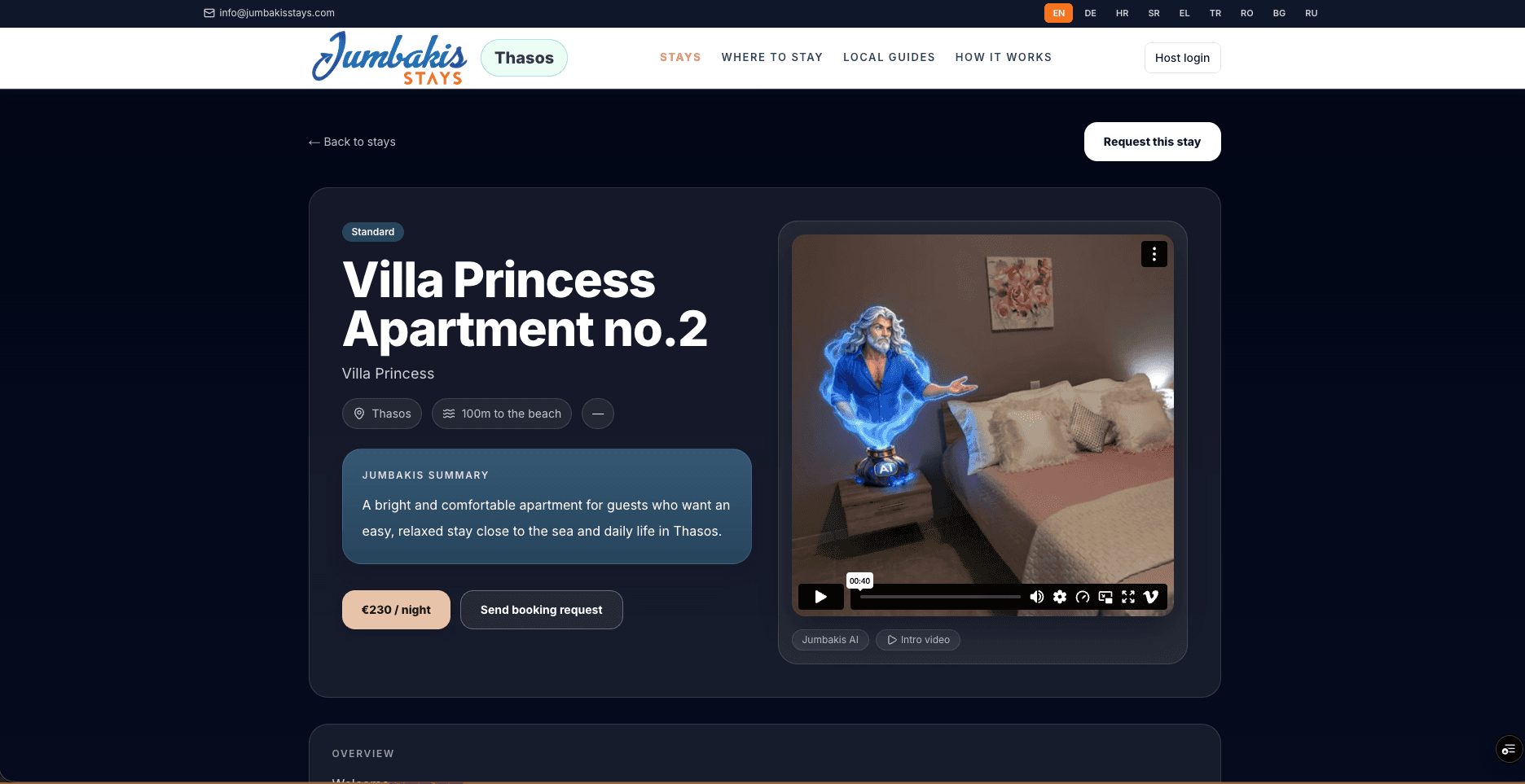
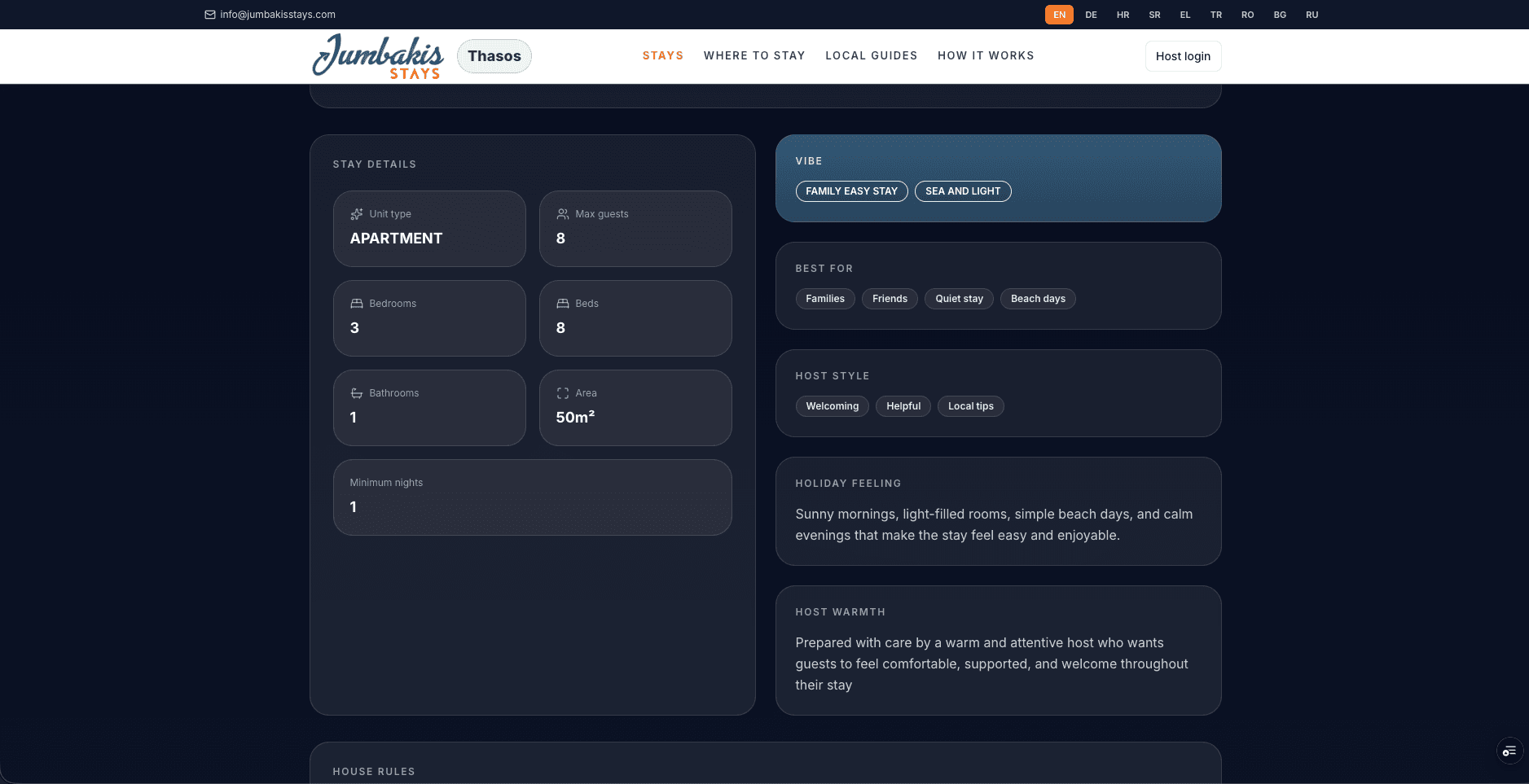
Users need enough visual content to want the property, but also enough clearly structured information to decide whether it genuinely fits their trip.
Host workflow
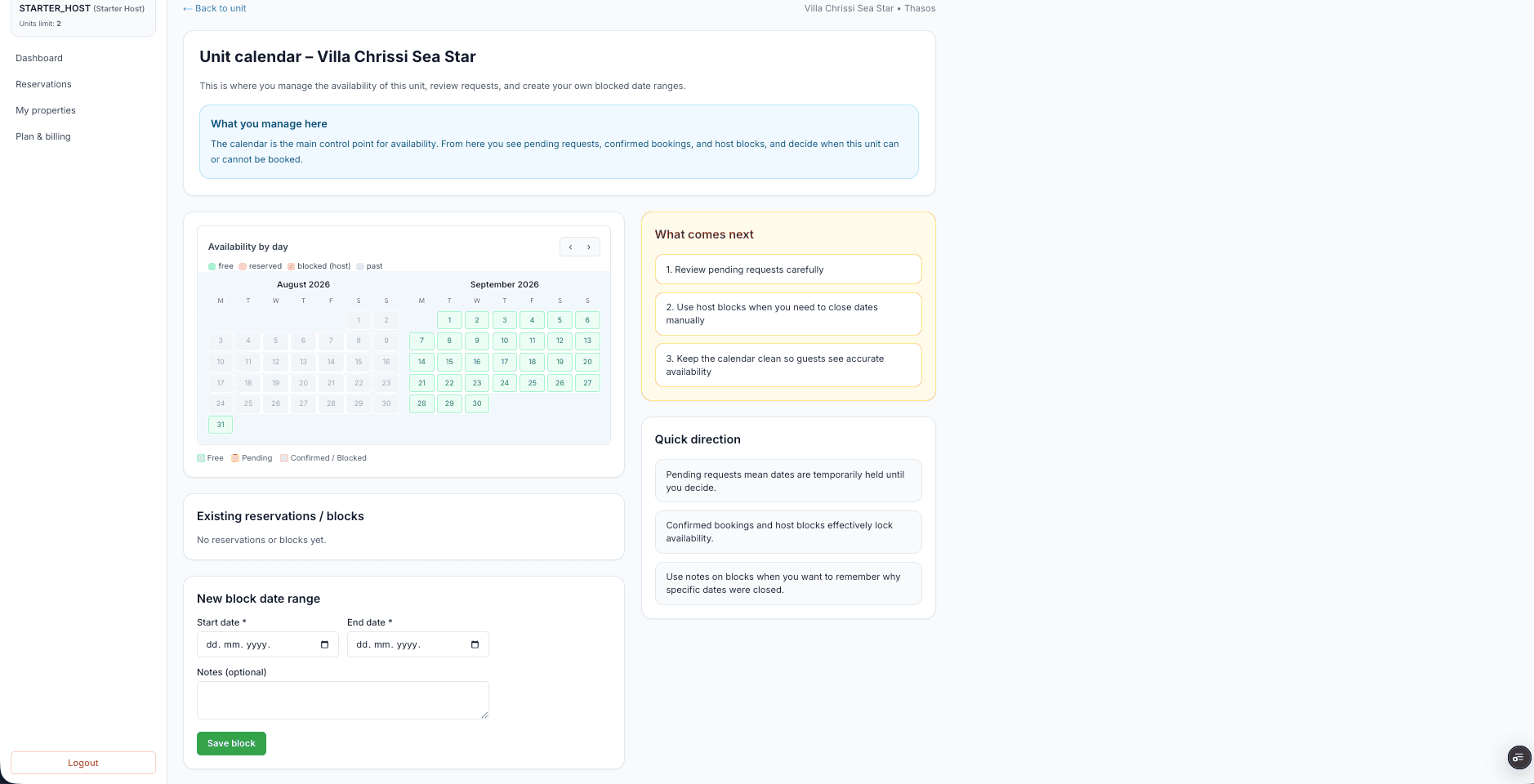
Guests only see the available offer. Behind that public experience, hosts manage availability, booking requests, and the periods in which a unit cannot be reserved.
The calendar becomes a central place for understanding available, occupied, and manually blocked dates without relying on parallel spreadsheets or manual records.
SEO in tourism
Travellers do not need to know the brand before beginning their research. They often start with a place, a region, accommodation, or a specific need related to a destination.
clear destination URL architecture
unique content for each location
strong title and description metadata
internal connections between destinations and accommodation
optimized photography
mobile performance
Domain experience
Tourism destinations and accommodation
Mediterranean, Thasos, Kavala, and Istria
Destination landing-page architecture
Visual presentation of properties and locations
SEO architecture for tourism content
Responsive experiences for mobile travellers
User journeys from exploration to concrete interest
What this project demonstrates
TRAVEL
A technically strong system is not enough if the destination does not look attractive. Great photography is not enough if users cannot find the right accommodation. And neither delivers its full value if nobody discovers the product in the first place.
Next case study
Rent a Car Uni Line is a different kind of case study: not a single development project, but several years of organic search work for a real operating business.
Rent a Car Uni Line →