
Commercial intent
Pricing
A user actively searching for rental prices is much closer to a business decision than someone who is only beginning to research the subject.
SEO · Rent a Car · Long-term work
Rent a Car Uni Line was a long-term SEO and web project where organic visibility was not an abstract metric. It was one of the ways a real operating business reached potential customers.
Technical SEO · Content · Local search · Search intent

Historical note: this case study refers to the period when I worked on the project. My involvement ended more than a year ago. The current live version of the website is not my work and is therefore not shown here.
Context
Rent-a-car is a useful example of the difference between an SEO metric and a business outcome.
Someone searching for what car rental is, rental pricing, a specific vehicle model, a van for several passengers, or a chauffeur service is expressing a completely different intent.
Each of those searches says something different about the user's decision stage and requires different content and a different landing page.
Search intent
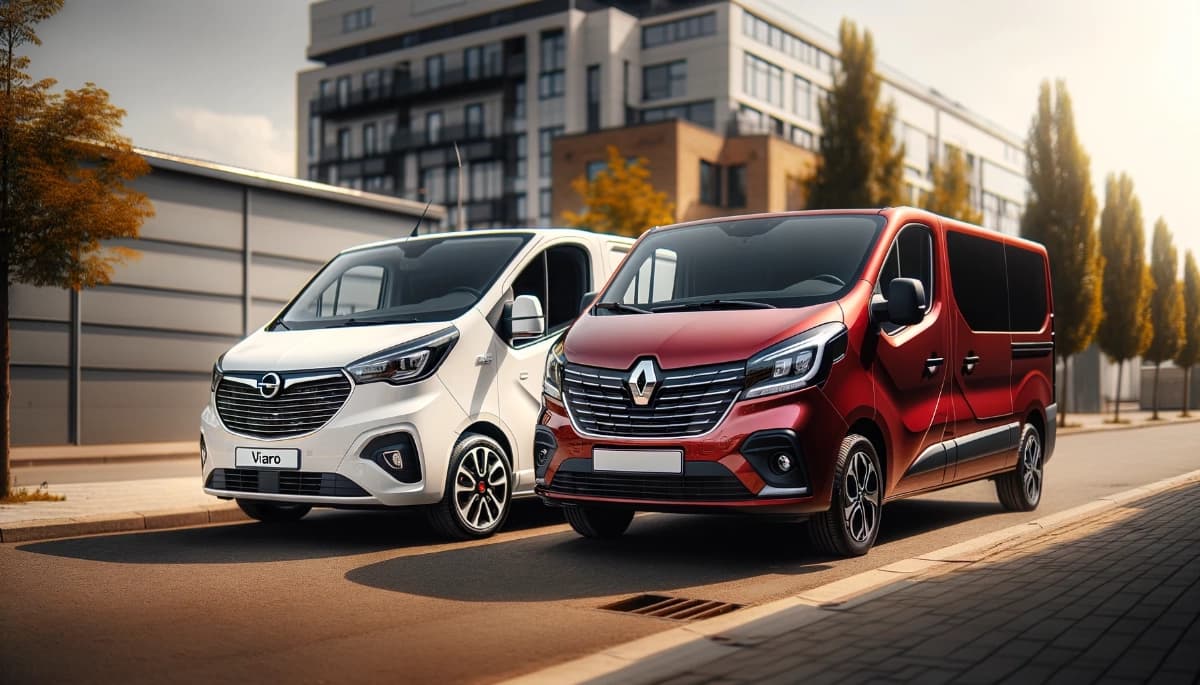
The visuals below are not screenshots of the current website. They are project-era materials that illustrate some of the different commercial topics around which the content was developed.
Commercial intent
A user actively searching for rental prices is much closer to a business decision than someone who is only beginning to research the subject.
Vehicle intent
A specific vehicle type has its own audience, criteria, and reason for visiting the website.

Service intent
A specialized service should not be hidden inside one paragraph when users are actively searching for that exact service.

Supporting content
Useful supporting content removes a real question or obstacle that a customer may have before making a booking.
SEO layers
Indexation, canonical URLs, redirects, sitemaps, robots directives, site architecture, and technical changes that needed to be monitored and maintained over the years.
Someone searching for a price, a specific vehicle, a van, or a special service is at a different stage of the decision process and should not land on the same generic page.
Different vehicle types and services were supported by content designed around specific user needs instead of one page trying to rank for everything.
For a rent-a-car business, location is directly connected to search intent and to the way potential customers look for the service.
Alongside commercial pages, practical customer questions can become useful content that builds topical relevance and supports the decision process.
SEO was not a one-time optimization project. Rankings, competitors, Google, and the business itself changed over several years.
Technical SEO
Long-term work means a website goes through redesigns, URL changes, new content, technical issues, and changes in search itself.
canonical URLs and duplicate content
redirects and preserving the value of existing URLs
robots directives and sitemaps
index / noindex decisions
internal linking architecture
performance and image optimization
SEO consequences of technology or site-structure changes
Long-term lessons
Preserving a URL that already has history can be more valuable than unnecessarily redesigning the entire structure.
Search volume is not the only metric that matters — commercial intent can be more important than a large number of searches.
Good SEO content should solve a real customer question, not simply contain a keyword.
A technical problem can neutralize strong content if search engines cannot understand or index the right page.
Competitors evolve, so the strategy does not end when a page is published.
SEO should ultimately be measured by relevant users and business enquiries, not only by rankings.
Results
I no longer have the original Search Console and Analytics reports from that period, so this case study does not use invented percentages, rankings, or charts.
If I later recover an original historical report or screenshot, it can be added here as supporting evidence.
What this project demonstrates
7Y
Several years of work on a real business website taught me to look at SEO together with technology, content, competition, and the underlying business goal.
That is why today I can analyze an SEO problem both as a developer and as someone who has watched what happens long after a change reaches production.
SEO today
From traditional business websites to Next.js applications with thousands of public URLs, the principle remains the same: search engines first need to understand the system we have built.
SEO services →