More opportunities do not automatically mean more relevant opportunities
A large job feed quickly becomes another list the user has to review manually. The real value starts when the system understands what is relevant to that person.
Data · Search · Product · SEO
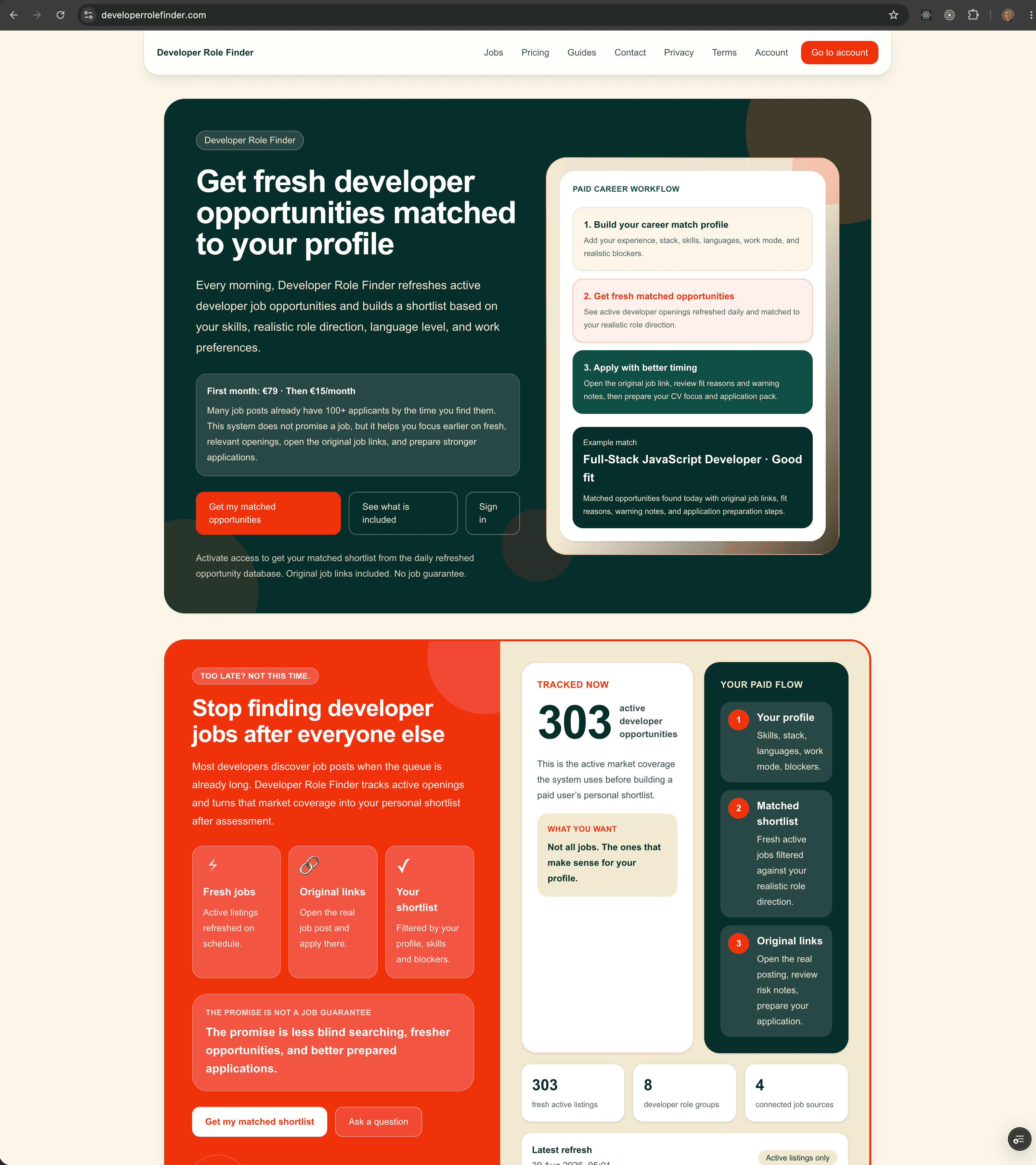
Developer Role Finder is designed to shorten the distance between “there are many jobs available” and “these are the opportunities that actually make sense for me.”
Data · Matching · Search · Paid product · SEO-first
Problem
Showing someone 300 or 3,000 jobs without enough context simply gives them more work to do.
The real problem is recognizing seniority, technologies, location, work mode, and other characteristics, then connecting those signals with what a specific developer is actually looking for.
The product therefore develops around relevance, not simply around the size of the database.
Product challenges
A large job feed quickly becomes another list the user has to review manually. The real value starts when the system understands what is relevant to that person.
Role titles, technologies, seniority, location, work mode, and other details need enough normalization for search and filtering to become useful.
Users should not have to explain what they are looking for every time. Their preferences and professional context become part of the product workflow.
The free experience needs to demonstrate real product value, while the paid layer should unlock broader access without intentionally degrading the free product.
Public job pages and their architecture need to make sense for both users and search engines from the beginning.
The number of jobs alone is not enough. Organic queries, engagement, clicks toward full access, registrations, and paid conversions are what determine whether the product is gaining traction.
Jobs feed
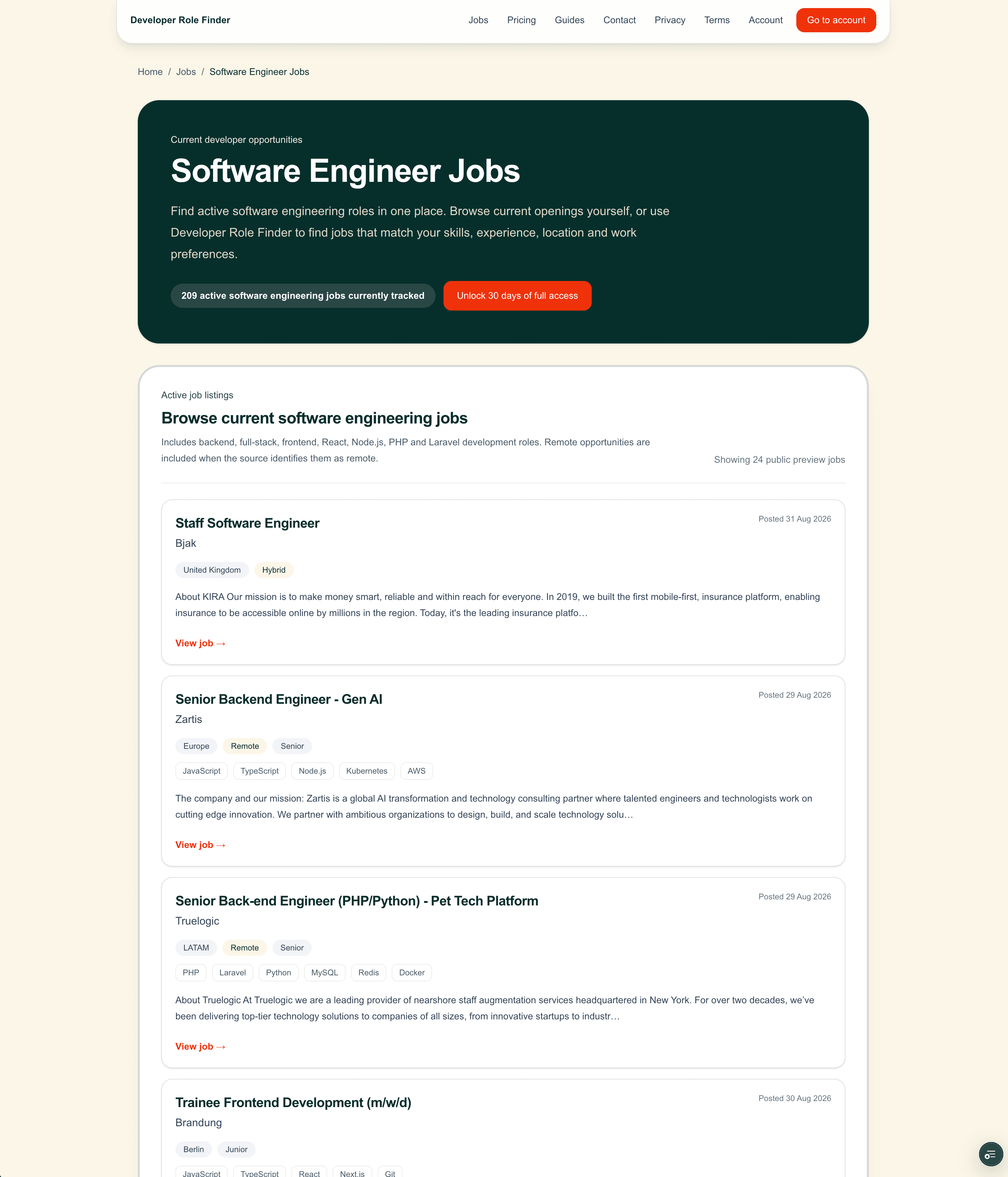
The main jobs screen needs to demonstrate that this is not simply a landing page, but a tool for repeatedly exploring developer opportunities.
Personalization
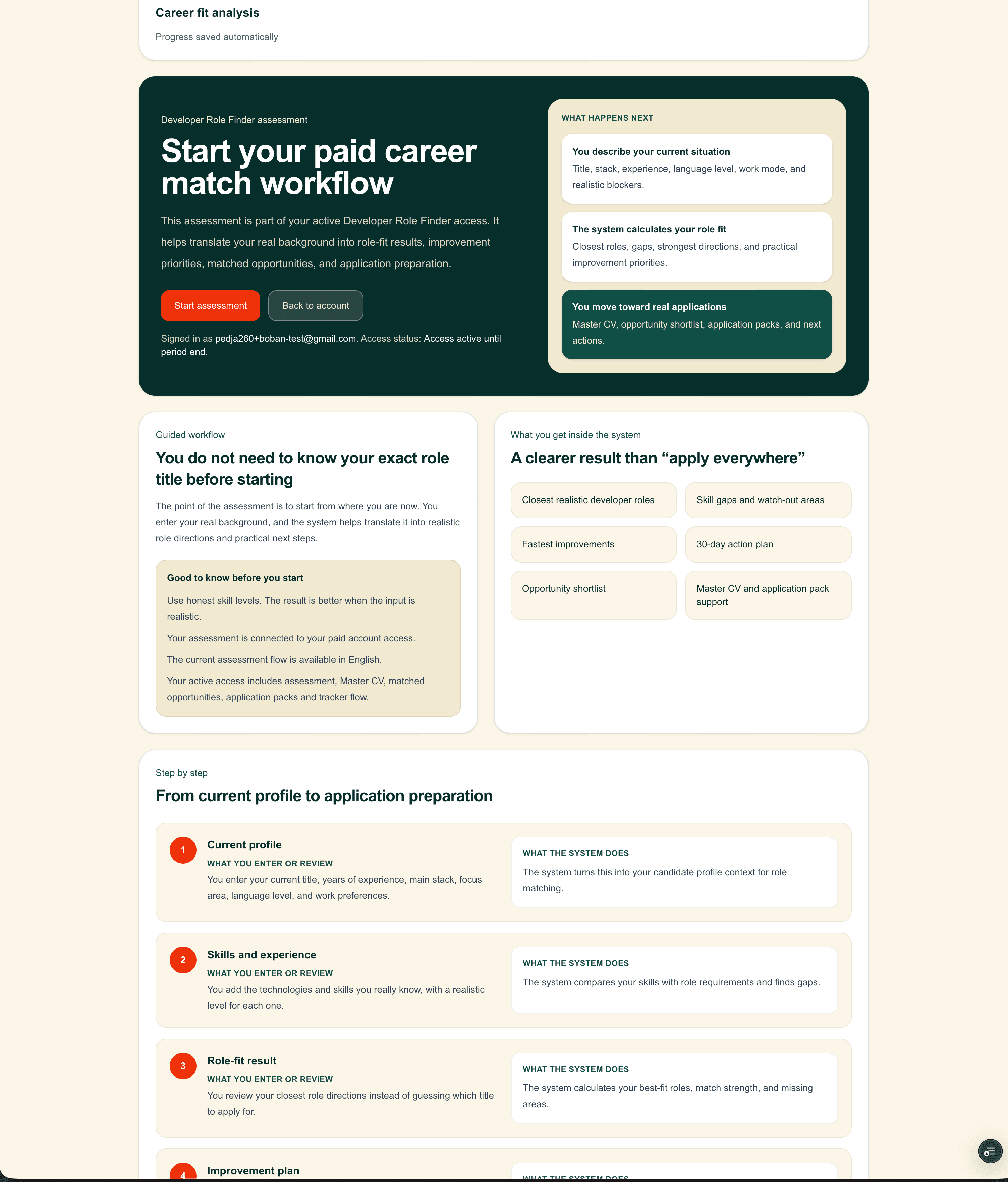
The system should remember what “relevant” means to the user and apply that context during future visits.
This creates room for matching, ranking, and different ways of presenting opportunities without forcing users to repeat the same filters every time.
Product workflow
Profile
The user defines relevant preferences and professional context.
Data
The system organizes and normalizes a large number of developer opportunities.
Match
Profile context and job data are connected so more relevant opportunities can receive priority.
Explore
The user searches, filters, opens, and saves interesting opportunities.
Unlock
The paid layer unlocks broader feed access and additional product value.
Free → Paid
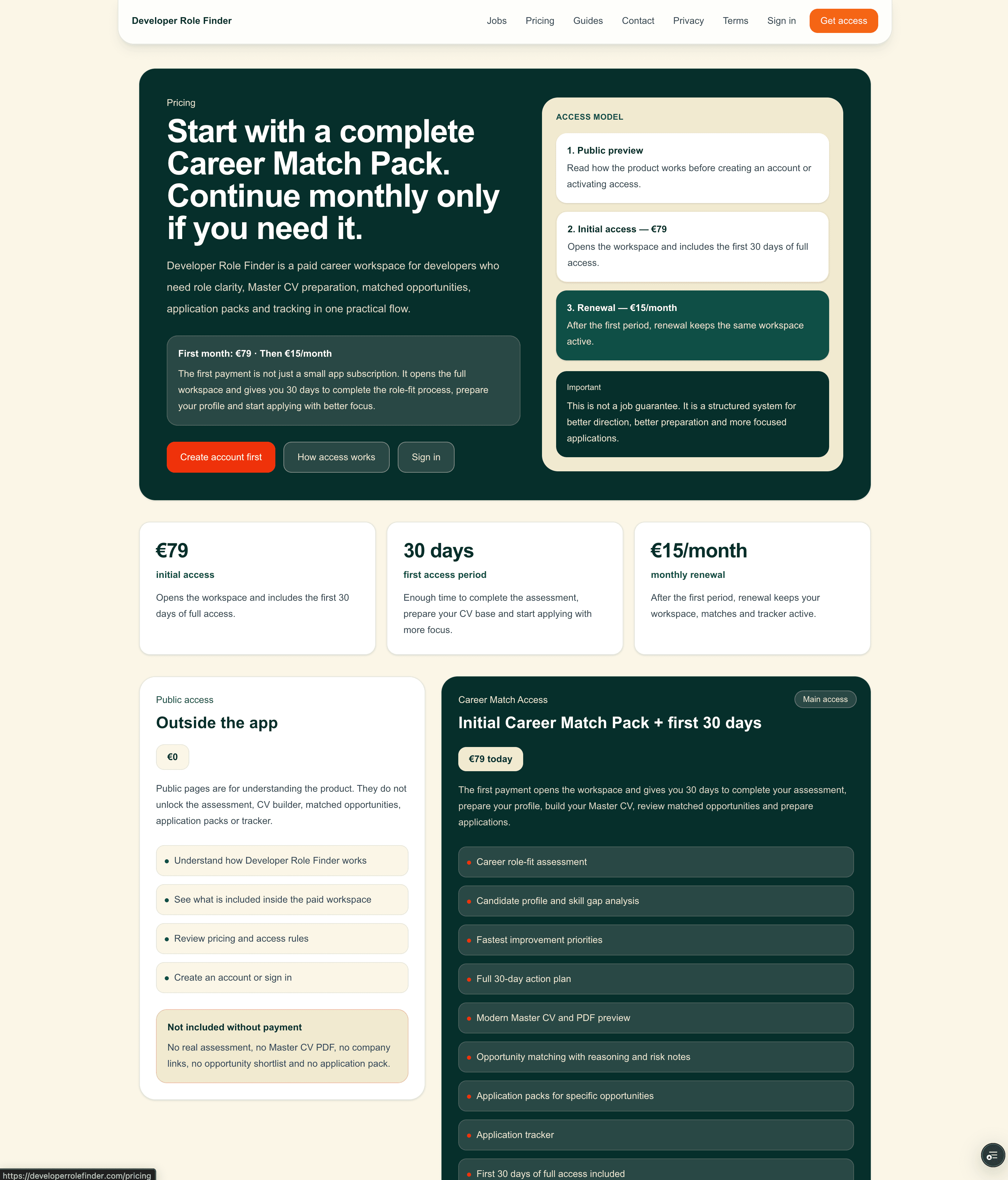
Monetization should not begin by hiding the product.
Public and free access should let users understand what the product does. Paid access then unlocks more of the feed and enough additional value for upgrading to make sense.
SEO-first product
SEO
Public job pages, URL structure, metadata, canonical rules, and the sitemap are part of the product architecture.
The goal is for search engines to discover useful public content while that same SEO layer naturally leads users toward the actual product.
Product layers
Public SEO pages for developer jobs
Structured jobs feed
Search and filtering
User profile and preferences
Matching logic
Shortlist and saved opportunities
Free and paid access
SEO metadata, canonical, and sitemap architecture
Tracking organic impressions, clicks, and conversions
What this project demonstrates
DATA
Developer Role Finder connects data, user profiles, search UX, matching, monetization, and organic product discovery.
A good decision in one layer can create a problem in another, so the product needs to be considered as a whole.
Next area
Jumbakis Stays combines tourism-domain experience with accommodation discovery, AI-assisted matching, and host-side workflows across several destinations.
Jumbakis Stays →